

What "flawless" and "perfect" mean in diamond ads
Two words with a defined meaning in the FTC Jewelry Guides.
Disclosure: We may earn a commission if you buy through links on this page. It does not change our guidance. Affiliate Disclosure
The 10-power test
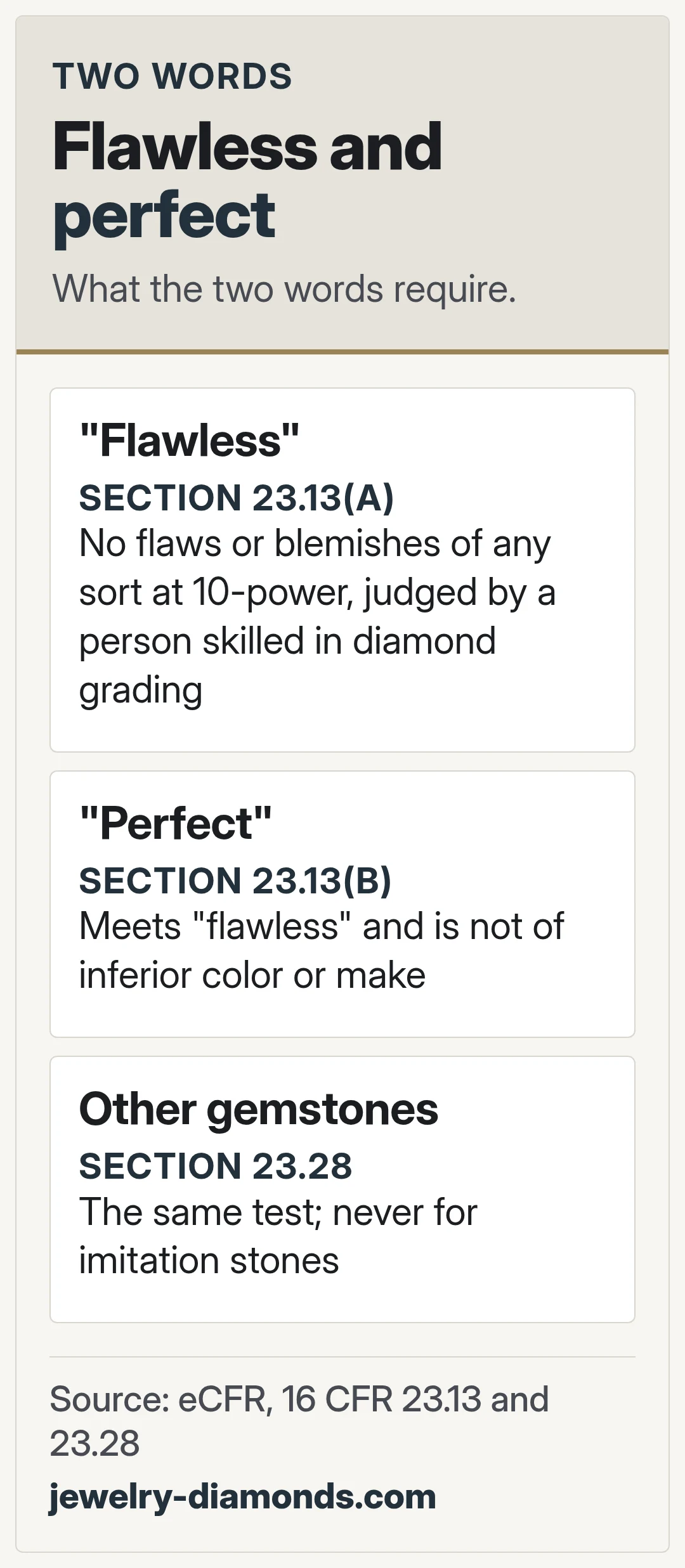
Section 23.13(a) says it is deceptive to call a diamond "flawless" if it shows flaws, cracks, inclusions, carbon spots, clouds, internal lasering, or other blemishes or imperfections of any sort when examined under a corrected magnifier at 10-power, with adequate illumination, by a person skilled in diamond grading.
Perfect
Under section 23.13(b), "perfect" should describe only a diamond that meets that definition of "flawless" and is not of inferior color or make.
Pieces with more than one stone
Section 23.13(c) says that if only the principal diamond or diamonds in a ring or other piece meet the definition, the listing should say that the description applies only to them.
Other gemstones
Section 23.28 applies the same test to gemstones, judged by a person skilled in gemstone grading, and says imitation gemstones should never be described with those words.
Grades and grading systems
A note to section 23.1 says that when a listing states a grade, it should name the grading system used. We do not say what any grading term means beyond the Guides.
FAQ
General information only. We are not a jeweler, appraiser, or gemological lab, and we do not grade, appraise, or verify any stone or metal. Before you buy, read the seller's full description, including whether a diamond is mined or laboratory-grown, any treatment, the metal's karat or fineness, and the weight, and check any grading report with the lab that issued it.



Next: grading reports
Read the report, then check it.
